Keep your slate full and your audience coming back
Your creative team stops wrestling with structure and starts choosing the stories worth telling. Development that used to take months happens in days — and every department walks in with exactly what they need.
Built for feature films, TV dramas, comedy, and short or web series.
You talk to ORCA. This is what it builds.
01
Monday. The story bible lands.
Your writer drops a story bible and records a voice memo describing the characters. That's the input. ORCA reasons through every page — extracting characters, mapping rules, testing forks — and by end of day produces the story foundation you see in the preview. A file and a voice note in. A structured creative analysis out.
ORCA web app
You ask
02
Wednesday. The script supervisor catches what humans miss.
You ask "what did the analysis catch?" ORCA reports voice drift, motivation gaps, and continuity breaks — all caught before the table read. The script analysis you see is what ORCA produced by reasoning across every scene, character profile, and world rule. Your conversation steers the corrections. ORCA's analysis catches what humans miss.
ORCA web app
You ask
03
Thursday. Every department gets their own package.
You say "run the full production package." ORCA reasons through the screenplay and produces department-ready outputs: costume breakdowns with mood boards, props separated by type, color scripts mapped end to end. Every deliverable in the preview traces back to the same analytical backbone — generated from one instruction.
ORCA web app
Proxy — Generated by Agentic Story Pipeline
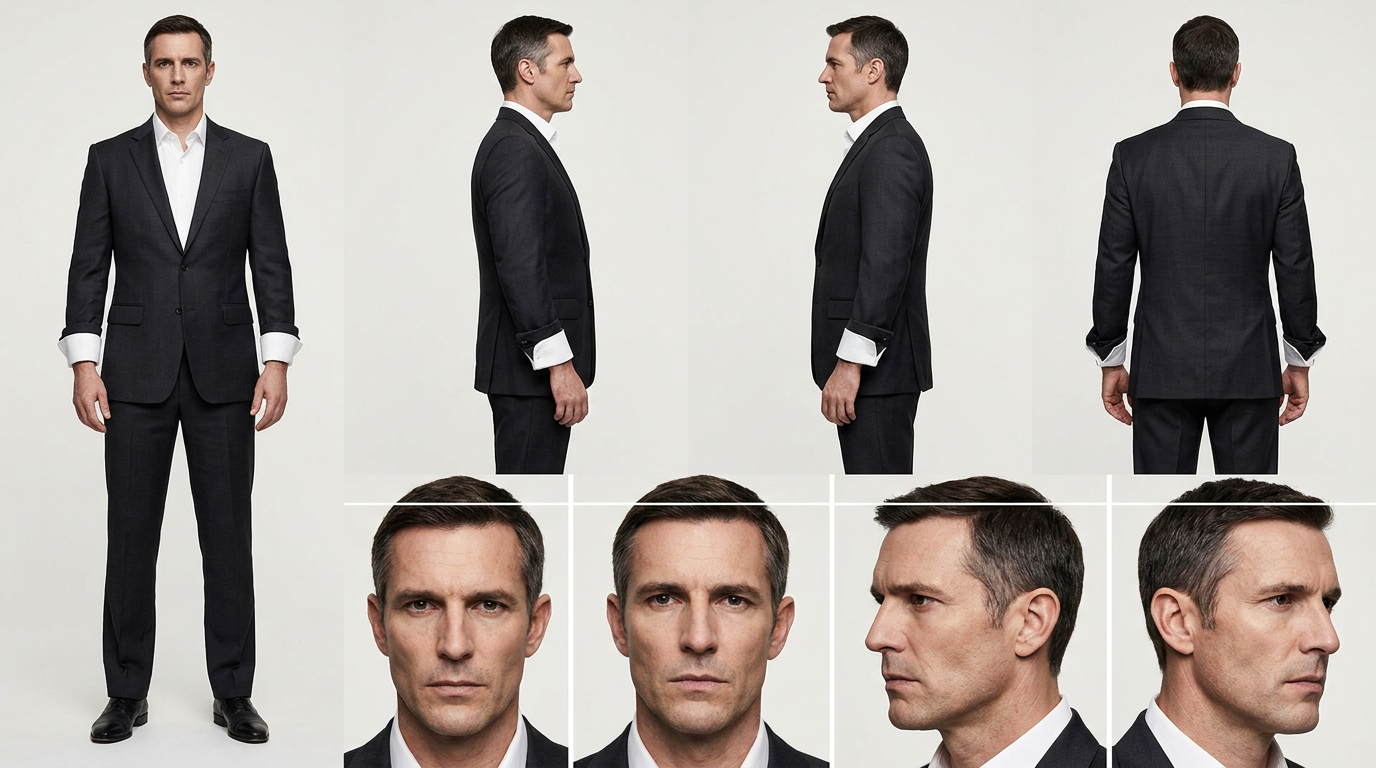
Richard Knox protagonist
| Age | early 40s |
| Build | lean but broad-shouldered |
| Hair | dark brown |
| Role | LEAD |
LOCKED TRAITS
RELATIONSHIPS
| Target | Type | Description |
|---|---|---|
| Michael Chen | trusts | Co-founder, confides in private |
| Douglas Thornton | opposes | Target of the proxy fight |
| Victoria Knox | protects | Shields from both families |
EXPRESSION RANGE
You ask
04
Friday. The pitch deck builds itself.
You ask "is the pitch package ready for Monday?" ORCA confirms with a complete inventory: shot lists, storyboard keyframes, and the FOUNTAIN screenplay — all structured outputs from the analysis it ran across the full development cycle. One conversation thread. Every deliverable accounted for.
ORCA web app
47 pages — 9 characters, expression sheets, audition sides
18 pages — world rules, environment refs, color script
20 pages — shot lists, keyframes, must-preserve
You ask
When development takes longer than production
Your writers spend months developing a screenplay. By the time scripts reach the table, character voices have drifted, continuity errors surface, and the arc that worked in the outline doesn't land on the page. Meanwhile your audience moves on. The problem isn't talent — it's that development was never designed for the pace your audience expects.
Your writers focus on story. Every department gets what they need.
ORCA handles the structural bookkeeping so your creative team spends their time on the decisions that actually shape the story.
Your writers review and guide the creative direction at every stage.
Workflow Steps
Script breakdown — every element tagged by department
Costume Bibles, props breakdowns, color scripts
Catch continuity breaks and voice drift before the table read
Fittings, screen tests, and mood boards — not just specs
Outputs
Costume Bible
RICHARD KNOX — Bespoke charcoal suit, French cuffs rolled to forearm. Costume Bible entry: Script Day 1, Change 1. Fitting notes, screen test under actual lighting, continuity photo after every setup.
Props Breakdown
Hero prop: bourbon service — cut-crystal decanter, two tumblers. Action prop: legal pad, Michael handles every scene. Set dressing: polished steel table, leather briefcases. Continuity card per item by script day.
Color Script
Scene 4: warm golds from desk lamp, cool whites from rain-streaked glass. Color script mapped across the full screenplay — each location has practicals noted and atmosphere references.
Atmosphere References
LP meeting: 6 ambience layers — HVAC hum, leather shifts, pen taps, distant elevator, muffled hallway. Room tone captured. Foley cues flagged per scene.
Story Bible
Proxy — A Corporate Thriller · 7 principals with voice profiles · World rules that every department can reference · Script breakdown as single source of truth.
Your slate stays full and your audience keeps coming back
Your creative team always has material they want to build on — so development never stalls and you stay relevant to your audience.
Frequently asked questions
Yes. ORCA maintains tiered memory across episodes and seasons — who knows what, when they learned it, which characters are dead, which world facts are established. Episode 12 inherits every constraint from episodes 1–11 automatically. Character knowledge decays realistically. Voice consistency is fingerprinted from 412,000 utterances across 353 real screenplays — when a character drifts from who they are, ORCA catches it because it's studied how 5,000+ characters actually speak. The showrunner's mental model of the story — ORCA has it too, except it doesn't forget.
Everything is derived atomistically from the screenplay — the same way the OSINT engine derives evidence chains from raw documents. Costume gets wardrobe continuity per character per scene. Props gets hero props separated from set dressing. Lighting gets a color script. Cinematography gets keyframes and camera movement. Production design gets atmosphere references per location. Each bible locks hierarchically — once your department head approves at any level, those sections survive regeneration. Nothing downstream can break what's already been signed off. Every spec traces back to a line in the script. Nothing is invented.
No — everything is one-shot. You can download each video and edit as you see fit, but the goal was always to orchestrate the full end-to-end cycle with enough context that editing becomes optional. ORCA carries character visuals, environment continuity, and shot-to-shot framing across every clip so the output holds together. Currently in production on an 8-episode bilingual series. You can edit. You probably won't need to.
A commercial or micro drama takes about 30 minutes. A web series or TV episode runs a few hours. A feature film can take up to 8 hours. Sometimes 15 hours when the adversarial critics run multiple rounds — 16 attack types across continuity, character, craft, dialogue, and structure. A Red Team attacks the script while the generator adapts. The longer it runs, the tighter the script gets. A feature film that used to take months of development. ORCA does it overnight.
You can add your entire crew into the conversation with the agent. But be mindful — this is not a chatbot or a computer-use agent. It's not here to clean your emails or schedule meetings. Your team talks to ORCA about the story, the characters, the production. ORCA responds with structured work product. Add your crew. Just don't ask it to book a restaurant.
Storyboarding tools generate visual sequences from prompts. ORCA produces the entire development layer underneath — story bibles, FOUNTAIN screenplays, 5 department bibles, platform constraints, and adversarial script analysis that catches problems before the table read. 19 perturbation techniques keep the writing from feeling formulaic — vulnerability cracks, silence beats, perspective shifts, cold opens. The visuals come last, after the story is airtight. Storyboard tools give you frames. ORCA gives every department a reason to trust those frames.
Your studio does. Every output — screenplays, character breakdowns, department bibles, generated video — is work product owned by you. No co-authorship claims, no licensing entanglements, no usage restrictions. Your story, your IP, full stop.
Ready to walk into the room with material your writers want to build on?
See how ORCA turns a story bible into Costume Bibles, props breakdowns, color scripts, and a full pitch package — in days, not months.
Book a Demo